

Every crisis I have led through has taught me the same quiet lesson: the one is, you need to protect your focus. You cannot find it under "challenging moments" very easily. When uncertainty hits, decisions start to carry more weight and people look at leaders not just for answers, but for reassurance.
Early in my leadership journey, I believed staying on top of everything was the best way to lead through those moments. I worked longer hours, stayed constantly available and tried to respond to every issue as it surfaced.
What I did not realise then was that I was slowly losing the clarity which my team needed the most. Over time, I learned that effective crisis leadership is less about doing more and more and more about deciding where your attention truly belongs.
This blog shares personal insights from leading through uncertain and high-pressure situations.
Why Focus Is the First Casualty in a Crisis?
Focus is often the first thing to slip when a crisis hits. It loses gradually. You would lose clarity to minor distractions, emotional noise, and decision fatigue until you no longer notice them. Uncertainty pulls attention in every direction at once, making it difficult to concentrate on what truly matters. The constant mental juggling quietly fragments attention, leaving leaders reacting rather than intentionally guiding their teams.
The sense of urgency during a crisis only amplifies this effect. Everything feels pressing, creating the illusion of productivity as leaders respond to every small demand. At the same time, the sheer volume of decisions, information and emotional input creates cognitive overload, making it harder to prioritise effectively.
In these conditions, even experienced leaders can find themselves mentally exhausted, moving fast but losing clarity. With the loss of focus, important details start to slip from your mind. I have also noticed team members beginning to mirror my uncertainty. That quiet erosion of focus reminded me that leadership presence is invisible until it slips.
The Reality of Crisis Leadership: Lessons from the Frontline
Leading during a crisis feels different from day-to-day management. It is a pressure that
requires your attention, judgement and energy. From my experience, the real challenges fall into
several interconnected areas:
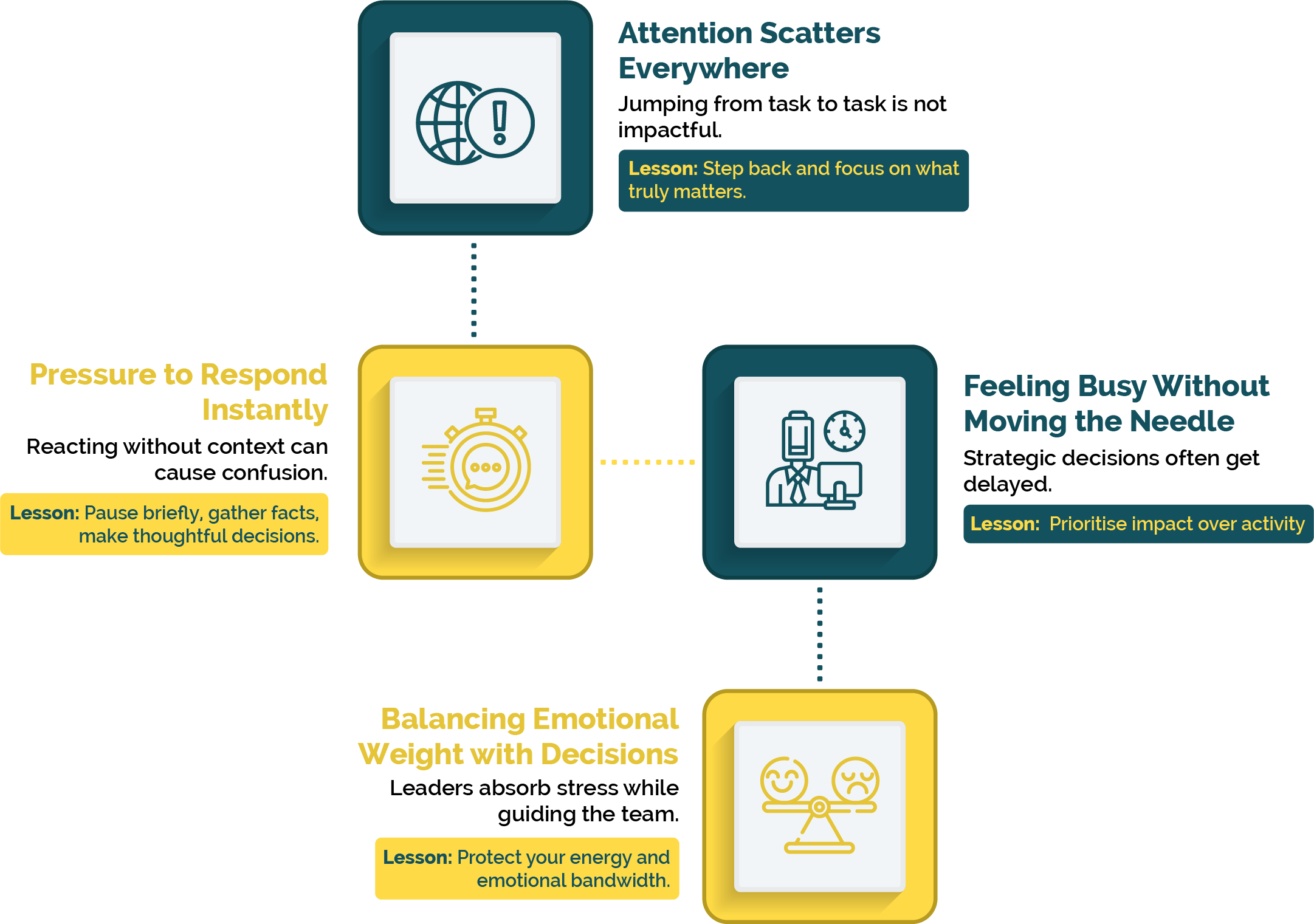
1. Attention Scatters Everywhere
In a crisis, everything seems urgent at once. Reports, emails, calls and requests multiply. It feels like every issue is the one that will make or break the situation. In past, I found myself jumping from one fire to the next during such situations. By the end of the day, I had "done a lot," but nothing I tackled had a lasting impact.
That was my first lesson: being busy is not the same as leading. I had to learn to step back and identify which issues truly needed my focus.
2. Pressure to Respond Instantly
People working with you and even your own conscience push you to answer immediately. There is little room to pause, reflect or check your assumptions. I remember a moment when a team escalated a problem I had not seen coming. My instinct was to respond immediately with a solution.
In hindsight, I realised that a quick reaction without understanding the full context created more confusion than clarity. I learned that a brief pause to collect the facts often prevents cascading mistakes.
3. Feeling Busy Without Moving the Needle
Crisis days are long, packed with activity, but by the evening, you wonder if anything meaningful actually moved forward. You would find yourself approving minor decisions and troubleshooting operational hiccups.
At the end of the day, the strategic decisions that could have mitigated the problem had been delayed. That was when I understood that leadership focus is about prioritising impact, not just being present everywhere.
4. Balancing Emotional Weight with Decision-Making
Crisis tests your emotional endurance and plans at the same time. Your team looks to you for calm, even as you process stress and uncertainty internally. I once stayed late for several nights, trying to solve every problem personally. While I appeared composed to the team, internally, I was drained. It affected my judgement and slowed my decision-making. I learned that protecting your emotional bandwidth is as important as protecting your time.
What Trail a Focused Crisis Leadership Leaves Behind?
After conquering the crisis, your team will remember how their leaders behaved under pressure. The important thing is you have stayed calm, made effective decisions and remained present for your team. This behaviour sets the tone for how people experience the crisis and shapes their perception of leadership for the long term.
Focused leadership during a crisis also leaves a lasting cultural impact. Leaders who maintain clarity and composure create an environment where trust, resilience and confidence can grow. Even after the immediate challenges fade, the habits and norms established during those high-pressure moments endure. By protecting focus and making intentional choices, leaders build trust that outlasts the crisis itself, showing their teams that steady, thoughtful leadership is possible even in uncertainty.
Final Thoughts
Leading through a crisis is challenging, but protecting your focus makes all the difference. It helps you make better decisions, stay calm and support your team when pressure is high. What matters most is not doing everything, but knowing where to put your attention and keeping your presence steady. By staying clear-headed and intentional, you can guide your team through uncertainty and leave a lasting sense of trust and confidence that outlives the crisis.
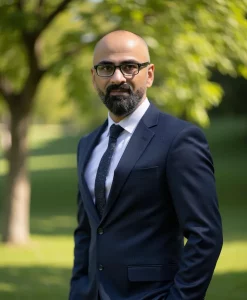
About Iqbal Ahmad
My name is Iqbal Ahmad (SFHEA). I hold various postgraduate qualifications, including but not limited to ACCA (Association of Chartered Certified Accountants), CIMA (Chartered Institute of Management Accountants) and MBA (Master of Business Administration). I have been involved in leadership training for over fifteen years and have mentored various leaders both within my organisation and in the capacity of a corporate trainer. I am also honoured to be a Senior Fellow of the Higher Education Academy (SFHEA).